

At Les Bacchanales, flavour begins outside
Thursday, July 9, 2026
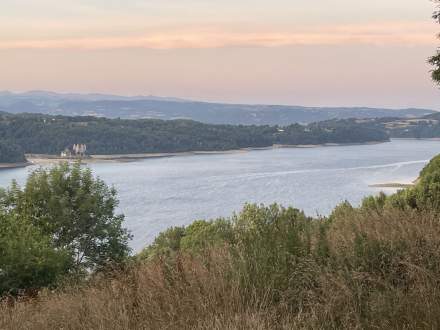
And yet, much of the restaurant's identity has quietly taken shape far from the kitchen, along the paths of ancestral Ardèche — Jean-Baptiste's heritage, standing alongside Italy's Cilento — Jérôme's deeply rooted Auvergne, the hills around the Monts du Lyonnais, the Pilat, and the plateau of Hauteville.
The chef and his companion — the restaurant's sommelier and an amateur mycologist — have shared this simple habit for years: going out to gather. Mushrooms, when the season allows. But also wild plants, flowers, fruit, and produce from Jean-Baptiste's family garden, tended with care by his mother, of peasant origin, who never really let go of her vegetable patch and orchard. Some of it ends up, sometimes, in the kitchen: in dishes, infusions, or quiet preparations of the house.
There is nothing professional about it. It is not a practice, so much as a form of attention — a way of staying close to what is living. Some days you come back with baskets full; other days, almost nothing. What all of it shares is the same discipline: watching, waiting, accepting uncertainty, and taking pleasure in whatever the day offers.
Autumn is the mushroom season. The old cèpe grounds known by the chef's mother. A remarkable chanterelle spot — occasionally giving rare amethyst chanterelles — passed down from Jérôme's great-grandfather. The Sancy areas the two of them have built up together over the years. Parasol mushrooms, chanterelles, black trumpets, depending on luck, weather, and timing, either supplement the restaurant's supplies or are dried to stretch the memory of a particularly fine haul. For the sommelier — amateur mycologist — these moments keep intact the pleasure of both discovery and recognition, that particular satisfaction born of encountering a landscape as much as a species. The chef, for his part, communes with his peasant roots in an open, unguarded happiness.
Spring has its own rhythm. Wild garlic season becomes a weekly ritual. Every weekend, while it lasts — to the great delight of the German Shepherd — the two of them head out around Lyon, up on the plateau of Hauteville, or, more rarely, into certain parts of Auvergne where an even more delicate wild garlic grows on acidic soils, naturally scarcer there, since the plant favours alkaline or alluvial ground by nature. This harvest feeds directly into the Bacchanales' spring menus: the chef's now-signature wild garlic oil, along with a series of dishes that mark the return of fine weather. Nettles, too, find their place in this seasonal cooking.
Other harvests appear more sporadically. Mallow, for the remarkable blue it produces. Round-leaf mint, blended with peppermint, makes an infusion that has become something of a house signature. Blackberries are preserved in vinegar; cherries and morello cherries, wild or from the garden, put up for later; while figs from the family garden and wild acacia and elderflower blossoms — destined for dessert syrups — find their way, depending on the year, into desserts and other preparations kept in store.
This practice of foraging has never been meant to turn the cooking at Les Bacchanales into wild cuisine. The house remains deeply attached to a classical culinary culture. But these hours spent outdoors feed a certain idea of taste — one born from close contact with the seasons, the land, and its produce, in a tangible, physical reality.
In the end, what we look for in nature is not a discourse or an identity. What we look for is what every cook and every sommelier is ultimately after: an intimate understanding of flavour.